
If you’ve ever watched your cat hunch low, neck stretched out, coughing as though something’s stuck – and then heard the vet say “asthma” – you’ll know how unsettling it is. The good news is that once you understand what’s setting it off, a lot of the day-to-day management is in your hands. And more often than not, the worst offender is sitting in the corner of the room: the litter tray.
Every time a cat digs, buries and steps out of a tray full of dusty clay, it sends up a little cloud of fine particles right where their nose is. For a cat with healthy lungs that’s a minor irritation. For an asthmatic cat, it can be the thing that tips a quiet morning into a full attack.
At Olive Scoop we make dust-free, plant-based litter here in the UK – including a line aimed specifically at cats with sensitive airways – so this is a subject close to home. Below is a straight-talking look at what makes a litter asthma-safe, the best options you can actually buy in the UK, and how to switch without stressing your cat.
One thing first: this is general guidance, not a replacement for your vet. Feline asthma is a serious condition, so always follow the treatment plan your vet gives you.
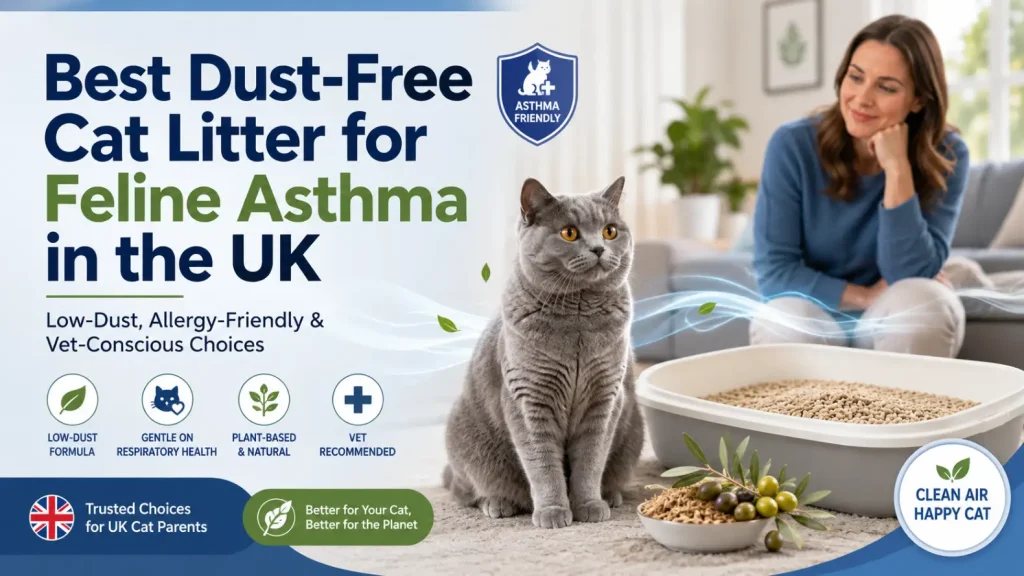
The link is simple: asthma is an allergic, inflammatory disease of the airways, and the litter tray is a daily source of two of the most common triggers – dust and fragrance.
When a cat breathes in something its immune system doesn’t like, the airways swell, tighten and fill with mucus. Pollen, smoke and household sprays can all do it, but for indoor cats the tray is hard to avoid because they use it several times a day, nose-down, at floor level.
The trouble with clay. Sodium bentonite clay clumps well and costs little, which is why it’s everywhere. The problem is what happens when it’s disturbed: dry clay throws off fine silica dust, and those particles are small enough to travel deep into the lungs. In a cat that already has inflamed airways, one good lungful while burying waste can be enough to trigger an attack.
The fragrance no one talks about. Plenty of litters are scented to keep things pleasant for us. Those perfumes are volatile organic compounds (VOCs), and to a cat with reactive airways they’re chemical irritants, not a fresh pine forest. An asthma-friendly litter has to be completely unscented – no exceptions.
A genuinely asthma-safe litter is made from a material that can’t break down into fine, inhalable dust, and carries no added scent. Beyond those two essentials, look for:
Here’s how the main UK options stack up on the things that matter for a cat with asthma.
| Litter | Dust | Scent | Clumping | Notes for asthma |
| Olive pit (OliveScoop) | Dust-free | Unscented | Strong | No silica; fast clumping keeps ammonia down |
| Tofu / soya | Virtually dust-free | Unscented | Strong | Heavy pellets don’t powder when dug |
| Recycled paper | Dust-free | Unscented | No | Vet favourite post-surgery; needs frequent changing |
| Wood / pine pellets | Very low (dry) | Light natural pine | No (breaks to sawdust) | Pine scent can bother very sensitive cats |
| Walnut shell | Low (fine organic dust) | Unscented | Yes | Less harmful than silica, but not truly dust-free |
| Clay (bentonite) ❌ | High silica dust | Often scented | Yes | Avoid – the classic asthma trigger |
| Silica crystals ❌ | Some dust | Often scented | No | Mined, dusty, not asthma-friendly |
Olive pit litter is one of the most asthma-friendly natural litters you can buy in the UK, and it’s what we make. OliveScoop is produced from 100% upcycled olive pits – a by-product of olive-oil pressing – with nothing artificial added.
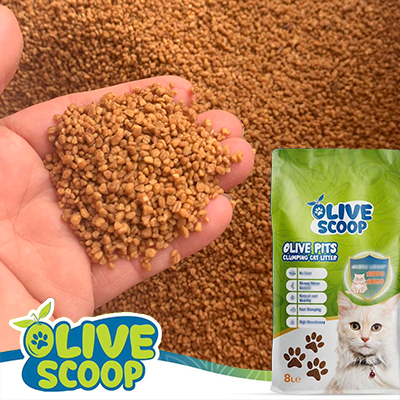
Why it suits asthmatic cats: it’s genuinely dust-free, so there’s no silica cloud when your cat digs, and it’s naturally unscented, so no perfume irritants either. It clumps fast and firmly, which means you lift out the soiled parts cleanly each day and keep ammonia from building up – a detail that matters a lot for sensitive lungs. It also tracks less than loose clay or shavings, so fewer particles end up on the floor to be stirred back up. On top of that it’s biodegradable and made from waste that would otherwise be thrown away. The honest downsides: as a premium natural litter it costs a little more than basic clay, and as a newer brand it isn’t yet on every supermarket shelf.
Tofu litter has become a firm favourite for indoor and respiratory-sensitive cats. It’s made from food-grade soybean fibre pressed into smooth, fairly heavy pellets.
Why it suits asthmatic cats: it’s close to 100% dust-free, because the dense pellets don’t crumble into powder when dug. It’s unscented but still controls odour well by soaking up liquid and neutralising ammonia quickly, and it clumps – unusual for a natural litter – so the tray stays cleaner between full changes. It’s soft on paws and biodegradable too. The catch is price: good tofu litter usually costs more than wood or paper.
Paper litter is the one most vets reach for after a respiratory diagnosis or surgery, and for good reason. Made from densely packed recycled newspaper, it’s soft, hypoallergenic and produces no dust at all.
The trade-off is maintenance. Most paper litters don’t clump – the pellets just absorb urine and sit there until you change the lot – so ammonia can build up faster and you’ll be doing full changes more often.
Wood pellets are affordable, eco-friendly and popular across the UK. They start out virtually dust-free and break down into sawdust once wet.
Two things to watch. That sawdust can become airborne if the tray isn’t kept clean, and natural pine contains phenols and a distinct scent. The kilning process usually removes the harmful phenols, but the pine smell alone can still irritate a very sensitive cat – so kiln-dried or low-scent softwood pellets are the safer bet.
Crushed walnut shell gives you a sandy, clay-like texture and good natural clumping without the silica. It’s a solid step up from clay for many cats.
It isn’t completely dust-free, though – it throws off a fine, dark organic dust. That’s gentler on the lungs than silica, but for a severely asthmatic cat it can still be a mild irritant, so it sits a notch below the truly dust-free options.
Switch gradually over a week or two, because cats hate sudden change and stress is itself an asthma trigger. A rushed swap can also send a fussy cat off to toilet somewhere else entirely.
A quick tip while you’re at it: clean the tray with hot water and a mild, unscented washing-up liquid. Skip the bleach and scented sprays – they linger and irritate sensitive airways.
Dust-free litter does the heavy lifting, but a few other small changes round it out:
Can dusty cat litter cause feline asthma? Dusty litter rarely causes asthma on its own – it’s an allergic, immune-driven disease – but it’s one of the most common and severe triggers. Breathing in silica dust from clay day after day can worsen the underlying inflammation and make attacks more frequent.
Is pine litter safe for cats with asthma? It depends on the cat. Wood pellets are low in dust, but natural pine contains volatile oils (phenols) and a strong scent that can irritate very sensitive cats. If you want to use wood, choose kiln-dried or unscented softwood pellets.
What’s the difference between “low dust” and “dust-free” litter? “Low dust” usually means a clay litter that’s been screened to remove loose powder – but it still sheds silica dust when scratched. “Dust-free” litters are made from materials like olive pit, tofu or paper that physically can’t shatter into fine airborne particles.
Why does my cat cough after using the litter tray? If your cat crouches, stretches its neck and coughs (often like it’s bringing up a hairball) right after toileting, dust or fragrance from the litter is the likely irritant. See your vet, and switch to an unscented, dust-free litter.
Does olive pit litter really have no dust? OliveScoop olive pit litter is dust-free – the granules don’t break down into the fine silica powder that clay produces, so there’s no inhalable cloud when your cat digs. That, plus being unscented, is exactly why it suits asthmatic cats.
How often should I clean the tray for an asthmatic cat? Scoop solids and clumps at least once a day, ideally twice. Ammonia from sitting urine is a gas that irritates the airways, so the cleaner the tray, the easier your cat breathes.
Conclusion
A feline asthma diagnosis is a worry, but it’s also something you can take real control of. Stripping silica dust and synthetic fragrance out of your cat’s daily routine lifts a heavy load off their lungs, and the litter tray is the obvious place to start. Whether you land on paper, wood, tofu or olive pit, the best dust-free litter is simply the one that keeps your cat breathing easily and your home clean.
Reference: