You’ve probably seen it on Amazon, social media or spotted a bag with an olive on the front and wondered whether it’s a gimmick. Olive-pit litter is one of the fastest-growing corners of the natural cat litter market, and most of what’s written about it is either a product advert or a single-brand review.
Here’s the straight version: what it actually is, how crushed olive stones manage to clump and kill odour, how it stacks up against tofu and wood, and the trade-offs the seller pages tend to skip.
Olive pit cat litter is a natural, biodegradable cat litter made from the crushed pits left over after the oil is extracted from olives.
The pits are dried, cleaned, and ground into small granules that absorb moisture, clump around the waste, and trap odors, without the hassle of clay dust or open-pit mining. It’s a way to turn a byproduct of the food industry into something useful instead of throwing it away.
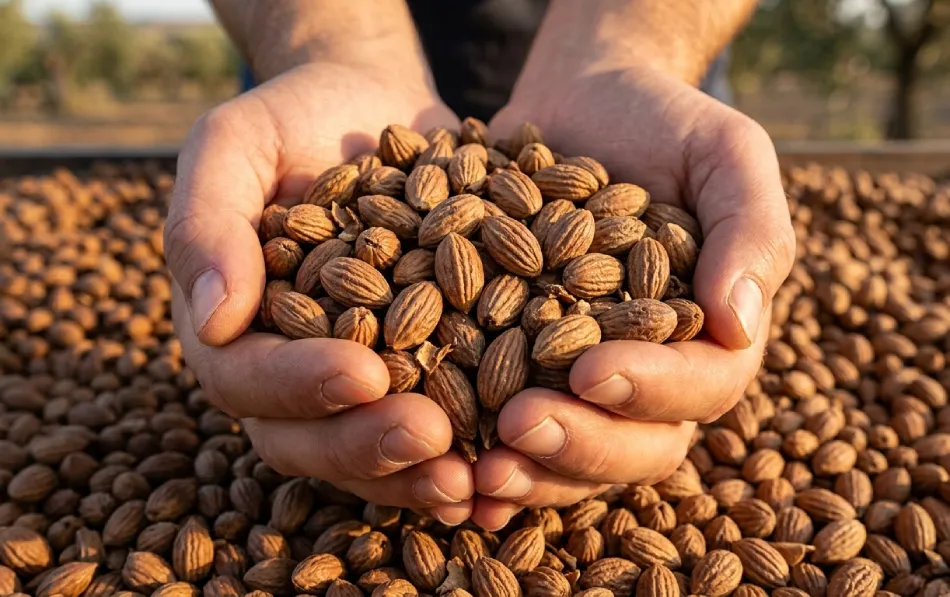
That’s the short answer. The long answer is more interesting, because the reason it works depends on what the olive pit actually is. The olive pit is not a soft seed. It’s a hard, woody shell-the endocarp in botanical terms-and it’s made of dense natural fibers.
When ground to the right degree, it produces a grain that behaves much like a small sponge: porous enough to absorb liquid, yet firm enough not to crumble into powder. This single characteristic has made this entire category successful.
Olive oil production generates an enormous amount of leftover stone. Every olive pressed for oil leaves its pit behind, and across the Mediterranean, that adds up to hundreds of thousands of tonnes of pits each year – most of which have historically been treated as waste or burned for fuel. Olive-pit litter takes that stream and sends it somewhere better.
The process is simple. After the oil is extracted, the pits are separated from the pulp, washed, and dried to reduce their moisture content to a minimum. Then they’re crushed and graded, sieved into a consistent particle size that’s coarse enough not to throw up dust but fine enough to clump and stay comfortable under a cat’s paws. Better products stop there. The granule is the litter; nothing synthetic gets added.
This is the part worth holding onto when you compare brands later: some olive-pit litters are pure crushed pit, and some have extras blended in (olive oil is a common one). The base material is the same upcycled stone either way, but what’s added to it changes how the litter behaves in the tray, and we’ll come back to why that matters.
Three things happen when a cat uses an olive-pit tray: the granules soak up the liquid, bind into a clump you can lift out, and lock the smell inside. None of it relies on perfume or chemical agents. It’s all down to the physical structure of the material.
Crushed olive stone is naturally porous. Under a microscope, the fibre is riddled with tiny channels and voids, and those act like capillaries – liquid gets drawn in and held rather than pooling on top. When urine hits the granules, the ones it touches swell slightly and grip each other, forming a solid mass around the waste. Give it a moment to set and it scoops out in one piece, leaving the dry litter behind.
That “give it a moment” is genuine, not a throwaway line. Olive-pit clumps firm up well, but they tend to set a little slower than sodium bentonite clay, which grabs almost instantly. Scoop too soon and you can break a half-formed clump. Wait until it’s solid and it lifts clean.
Clay litter is essentially a powdered mineral, so every time you pour it or your cat digs, fine particles puff into the air. Olive-pit litter is a crushed granule, not a powder – there’s simply far less fine material to become airborne in the first place. That’s why so many olive-pit products advertise “no dust” or “dust-free,” and why the category gets recommended for cats with feline asthma and for owners whose own chests don’t love a cloud of clay dust every morning.
It’s worth being precise here, because “100% dust-free” is a strong claim. Crushed natural material can still shed a little fine residue, and a few users of olive-oil-coated formulas report a faint film settling on nearby surfaces. The honest version: olive-pit litter is dramatically lower in dust than clay, which is the thing that matters for most sensitive households – not that it’s literally zero in every formulation.
Smell from a litter tray is mostly a moisture problem. Bacteria break down urine and faeces, and the wetter the environment, the faster that happens and the worse it gets.
Because olive-pit granules pull liquid in and hold it, they keep the surface drier and slow that breakdown – which controls odour at the source instead of masking it.
The result is a litter that stays neutral-smelling without added perfume, which suits cats that are put off by scented litters and owners who don’t want a “fresh linen” tray competing with the rest of the room.
Olive pit isn’t the only plant-based option, and it isn’t automatically the best one for every home. Here’s how it compares with the other naturals UK owners usually weigh up – tofu, wood, corn, and recycled paper – across the things that actually affect daily life with a litter tray.
| Litter type | Dust | Clumping | Tracking | Odour control | Paw feel | Eco profile | Weight |
|---|---|---|---|---|---|---|---|
| Olive pit | Very low | Good (sets slowly) | Low–moderate | Strong, fragrance-free | Granular, firm | Upcycled by-product, biodegradable | Light |
| Tofu | Very low | Excellent, fast | Low | Strong | Soft, fine | Plant-based, often flushable abroad | Light |
| Wood pellet | Low | Crumbles, not true clumping | Very low (large pellets) | Good, piney | Hard, large pellets | Renewable, biodegradable | Medium |
| Corn / wheat | Low | Good | Moderate (fine grains) | Good | Soft, sandy | Renewable, biodegradable | Light |
| Recycled paper | Very low | Poor / non-clumping | Low | Moderate | Soft | Recycled, biodegradable | Very light |
A few honest takeaways from that. Tofu clumps faster and softer than olive pit, so if instant scoopability is your priority, it’s a strong rival – but it can go through a bag quickly and some formulas soften into mush if a cat over-soaks one spot. Wood pellets barely track and cost little, but they don’t clump in the scoopable sense; they crumble into sawdust and suit a sifting tray. Corn and wheat feel lovely underfoot but the fine grain tracks more and, being food-based, can tempt a nibbling kitten. Paper is gentle and ultra-light, ideal after surgery, but it’s poor on both clumping and odour.
Where olive pit earns its place is the balance: very low dust and real clumping and genuine odour control and an upcycling story none of the others can claim. It’s a generalist that does most things well rather than a specialist that wins one column and loses two others.
Every litter has compromises, and olive pit is no exception. Sellers rarely spell these out, so here’s what to actually expect – drawn from hands-on reviews and real owner feedback, not the marketing copy.
Some formulas leave an oily residue. This is the big one, and it’s avoidable. A few olive-pit litters add olive oil to the granules, marketed as a way to moisturise a cat’s paws. It does soften paws – but testers and reviewers also report it leaving a faintly oily film that tracks onto wooden floors as little prints, sometimes enough to need a washable rug under the tray. If that puts you off, the fix is simple: choose a pure, oil-free crushed-pit litter. Same material, none of the grease. (OliveScoop, the main UK olive-pit brand, is an oil-free formula for exactly this reason.)
Clumping is slower than clay. As covered above, olive-pit clumps need a short while to set hard. Scoop the instant your cat steps out and you’ll catch some clumps half-formed and break them. It’s a minor habit change – wait, then scoop – but worth knowing if you’re coming from quick-setting bentonite.
The dark colour hides things you might want to see. Crushed olive pit is brown. That’s cosmetically fine, but if your cat has a history of urinary trouble, a dark litter makes it harder to spot blood in the urine – something a pale clay or crystal litter would show up. If monitoring for urinary health is a live concern in your house, factor that in.
Automatic litter boxes can be hit and miss. Owners of self-cleaning boxes report mixed results: some olive-pit litters run through a robot tray fine, others clump too softly or stick and jam the mechanism. If you rely on an automatic box, check your specific model against the specific litter before committing to a big bag.
It costs more than basic clay. Upcycled, natural, low-dust litter sits above bargain clay on price per bag. Lighter weight and good clump economy narrow the real-world gap – you’re often not getting through it as fast – but if absolute lowest cost is the deciding factor, clay still wins on the shelf price.
None of these is a dealbreaker for most homes. They’re the difference between buying with open eyes and being mildly surprised three days in.
Olive pit litter is made from a non-toxic, food-derived material, which makes it one of the safer options if a curious cat has a nibble – there’s no clay clumping agent or chemical fragrance to worry about. That’s a real advantage over some litters, especially for kittens, who explore with their mouths and occasionally eat a bit of whatever’s in the tray.
That said, “non-toxic” doesn’t mean “food.” It isn’t meant to be eaten in quantity, and a kitten that’s genuinely tucking into the litter rather than the occasional taste needs watching – persistent litter-eating (a behaviour called pica) is worth a word with your vet, whatever the litter is made of. For new kittens, the sensible approach with any natural litter is to supervise the first few uses and make sure they’re using the tray for the toilet, not the buffet.
For cats and owners with respiratory sensitivities, the low-dust point is the headline. Less airborne dust means less irritation for a cat with feline asthma and less for an owner with allergies or a dust-sensitive chest – which is a large part of why people switch to it in the first place.
One safety note that applies to every cat litter, not just this one: cat faeces can carry Toxoplasma, the parasite behind toxoplasmosis, which matters particularly for pregnant women and anyone immunocompromised. Wash your hands thoroughly after scooping or changing any litter tray, and if you’re pregnant, get someone else to handle litter duty where you can. That’s standard cat-owner hygiene – olive-pit litter doesn’t change it either way.
The green credentials are genuine, with one important UK caveat on disposal that the US-focused guides get wrong.
The eco case is straightforward: olive-pit litter is made from a by-product that already exists. Clay litter, by contrast, comes from bentonite that has to be strip-mined – open-cast pits that scar landscapes and don’t biodegrade once used, so spent clay sits in landfill more or less forever. Olive-pit litter is biodegradable and diverts waste stone from being dumped or burned. If shrinking your cat’s “carbon pawprint” is part of why you’re looking, this is a real, defensible improvement, not greenwashing.
Disposal is where you need to ignore most of the advice online, because it’s written for North America. Here’s the UK reality.
Do not flush cat litter down the toilet in the UK – not even litters labelled flushable. UK water companies advise against it; it can block pipes and, more importantly, UK sewage treatment isn’t designed to kill Toxoplasma, so flushing cat waste risks the parasite reaching rivers and the sea, where it has been linked to harm in marine life. “Flushable” claims on imported brands are written for different plumbing and different rules.
Be very cautious with composting. Olive-pit granules themselves are compostable in principle, but litter that’s been soiled with cat faeces should not go on a compost heap you’ll use for anything edible, because of that same toxoplasmosis risk. Garden composting of cat waste is generally not recommended in the UK.
So what do you do with it? For everyday soiled litter, the practical, council-advised route is to scoop into a compostable or plastic bag, tie it off, and put it in your general waste (black) bin – not the food or garden waste caddy. It’s not the most romantic ending for a biodegradable product, but it’s the responsible one under UK conditions, and the environmental win has already been banked upstream in what the litter is made from and what it isn’t (mined clay in a landfill).
If you want the quick verdict: olive-pit litter is an excellent fit for eco-minded UK owners, households with a cat (or a person) who reacts to dust, cats with sensitive paws, and anyone in a smaller flat who needs strong, fragrance-free odour control. It does a lot of jobs well at once, which is exactly what most homes need from a litter.
It’s a weaker choice in a few specific cases. If your deciding factor is the lowest possible price, basic clay undercuts it. If you depend on a fussy self-cleaning box, test compatibility first. And if you’re actively monitoring a cat for blood in the urine, the dark colour is a genuine drawback worth weighing against everything else.
For UK owners who land in the “yes” column, OliveScoop is the homegrown option to look at – a pure, oil-free olive-pit litter made for the UK market, dust-free and fast to clump, with subscription delivery so you’re not hauling bags back from the shop. It’s the straightforward way to try the category without importing an American brand and paying for the shipping.
Yes. It’s made from a non-toxic, food-derived material with no clay clumping agents or added fragrance, which makes it one of the safer choices if a kitten has a curious nibble. Supervise the first few uses, as you would with any new litter, and speak to your vet if a kitten is actually eating it rather than just tasting it.
A small taste is very unlikely to cause harm, because the material is natural and non-toxic – a key reason it’s recommended for kittens and curious cats. It isn’t food, though, so it shouldn’t be eaten in quantity. Repeated litter-eating in any cat is worth raising with your vet.
No. Don’t flush any cat litter in the UK, including “flushable” imported brands. It risks blocking pipes, and UK sewage treatment doesn’t remove the toxoplasmosis parasite from cat waste. Bag soiled litter and put it in your general waste bin.
Roughly a month for one cat is the common figure brands quote, though it depends on how many cats you have and how often you scoop. Because it clumps, you remove only the soiled portion each day and top up rather than dumping the whole tray, which stretches a bag further than non-clumping litters.
Sometimes. Results vary by model and by formula – some run through self-cleaning trays cleanly, others clump too softly or stick. Check your specific automatic box against the specific litter before buying a large quantity.
Both are low-dust, plant-based clumping litters. Tofu clumps faster and feels softer, but can soften into mush if a cat over-soaks one spot and may run out quicker. Olive pit clumps a touch slower but is firmer, controls odour strongly, and carries an upcycling story tofu doesn’t – it’s made from a by-product that already exists rather than a purpose-grown crop.