
Cats hide discomfort well, and heat is no exception. Yours will drape itself along the warmest windowsill in the flat at noon, looking perfectly serene, right up until it isn’t. British homes make this worse: built to trap warmth, mostly without air conditioning, and increasingly cooked by heatwaves the buildings were never designed for.
The fixes are cheap, mostly free, and quick. Here’s the plan.
Morning, before it warms up:
Midday, through the peak:
Evening, as it cools:
That’s the routine. The rest of this guide explains the why, and what to do when heat starts winning.
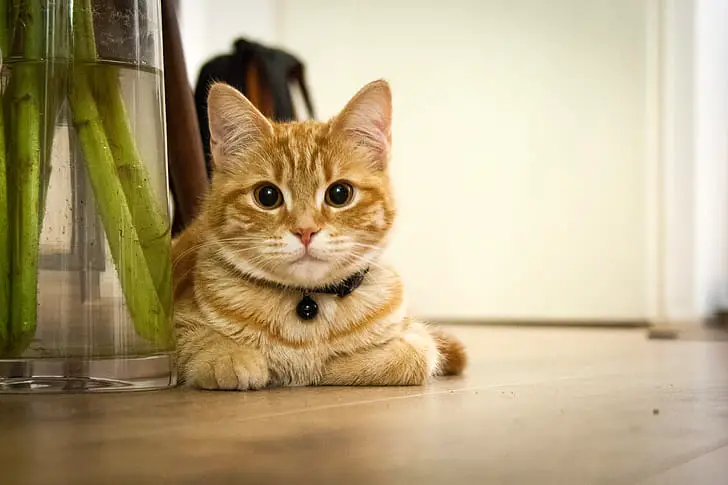
Cats barely sweat. A few glands in their paw pads, and that’s the lot, which is why you sometimes spot damp little paw prints on a hot day. Their main cooling tools are grooming (saliva evaporating off the fur carries heat away) and simply finding somewhere cooler to lie.
That has one practical consequence people miss: a fan pointed at a cat does far less than a fan pointed at you. Fans cool humans by evaporating sweat, and cats have almost none to evaporate. Fans still earn their keep by moving cooler air through a room, so run one, but pair it with something that works by contact, like a cool tiled floor or a damp towel.
Worth knowing too: many cats actively dislike air blowing at them, so aim the fan to move air through the room rather than at the cat, and let them pick their own distance from it.
One more difference worth knowing. Dogs pant to cool down as a matter of routine. Cats don’t. A panting cat is a warning sign, and it means skip to the heatstroke section of this guide.
Mostly true, and worth taking seriously, because it’s the most upvoted answer wherever UK owners compare notes, and it’s why half the internet will tell you to do nothing at all. Domestic cats descend from African wildcats, run a body temperature a degree or two above ours, and cope with warmth far better than dogs or humans.
Most healthy cats genuinely do self-regulate: they flatten out on the coolest floor they can find, sleep through the peak, sunbathe in the morning and move to shade by afternoon, all without consulting you. If yours is doing exactly that, sprawled dramatically on the lino, napping more, playing less, that’s a cat managing the heat, not suffering it.
Two honest caveats before you relax completely. Desert heat is dry, and UK heatwaves usually aren’t: humid air blunts the evaporative cooling cats get from grooming, so a muggy 30°C asks more of them than their ancestry suggests. And self-regulation assumes a healthy adult with options to choose from.
Kittens, elderly cats, flat-faced breeds, overweight cats, heavy-coated longhairs and cats with conditions such as kidney disease can’t simply be left to sort themselves out, and a top-floor flat that stays hotter inside than out takes the good options away.
So the rule that keeps both camps happy: provide the options (shade, water, cool surfaces) and let your cat choose between them. Step in only for the at-risk groups above, or when the warning signs further down this page appear.
None of this needs a drill, a landlord’s permission or much money.
Work with the sun first. Blinds down on whichever windows catch direct light, all day. Then ventilate in the cool margins of the day only: morning and late evening, windows open on opposite sides so air actually moves through, closed through the hot afternoon so you’re not importing warm air.
Build cool retreats. Bathroom and kitchen floors, lino, the empty bath, under the bed, the shaded side of a hallway: cats will find the coolest surface in the home if they can reach it, so leave internal doors open and let an oddly chosen spot stand. Aim to keep one room cooler than the rest, blinds down and door open, so there’s always somewhere better to retreat to.
A cooling mat can help, with two caveats every owner learns eventually: plenty of cats snub the gel type over its smell and feel, so the fabric, blanket-style mats are usually better accepted, and placement beats persuasion. Tuck the mat inside somewhere your cat already loves, a cardboard box on its side in a shaded corner works beautifully, rather than laying it somewhere new and hoping. A freezer block wrapped in a tea towel does the same job for pennies, a trick Blue Cross recommends, and if you have a cool garage or utility room, a microchip cat flap into it hands your cat a ready-made cold room.
And mind the windows. Every summer, vets treat cats that fall from open windows and balconies, and the risk climbs sharply in warm months when windows stay open for weeks at a time. Mesh screens, window restrictors or tip-and-tilt settings let the air in and keep the cat in. The RSPCA makes the same point about lockable ventilation for indoor cats.
Famously poor drinkers at the best of times, cats turn that quirk into a genuine risk once the temperature climbs.
Placement matters more than most owners realise. Move water bowls well away from both the food bowl and the litter tray; cats instinctively avoid drinking next to either. Put several bowls around the home, filled to the brim so whiskers don’t brush the sides, and try ceramic or metal if your cat turns its nose up at plastic.
Running water tempts many cats to drink more, so a pet fountain can pay for itself in one summer. Ice cubes work two ways: one in the bowl keeps water appealing, one on the kitchen floor becomes a toy that cools paws as it’s chased. Wet food helps too, carrying far more water than dry.
The kitchen holds more tricks. Stir a few teaspoons of water into wet food at every meal, the easiest hydration upgrade there is, and in a heatwave serve pouches straight from the fridge; most cats take chilled food happily when it’s hot. Cat broths and soup pouches are essentially water your cat believes is a treat.
The freezer earns its keep too: freeze a lickable treat sachet (the Lick-e-Lix and Churu style tubes) into a cat ice lolly, or make ice cubes from the spring water drained from a tin of tuna, skipping brine, which carries too much salt. Licking frozen treats is safe where crunching hard ice can chip teeth, so lollies beat cubes for enthusiastic chewers.
For the playful, a shallow tray of water on the floor, or an inch of water in the sink with a floating toy or two, turns cooling into a game that wets paws along the way. And if your cat blanks every one of these ideas, as some proudly will, that’s fine; well-placed bowls do the real work.
Check for dehydration if you’re worried: sticky gums, sunken eyes, or skin over the shoulders that’s slow to spring back when very gently lifted. Any of those, ring your vet.
A daily brush is a cooling tool in July. It strips out the dead undercoat that traps heat, and most cats shed heavily in warm spells anyway.
Two upgrades for the heavy-coated. Dip the comb in cool water before each pass; a wet-comb groom cools by evaporation exactly the way a cat’s own grooming does, and most cats accept it far more readily than a cooling mat. And for very long-haired cats who struggled through the last heatwave, a professional trim can genuinely help. Never shave to the skin, though: the coat insulates against heat and blocks sunburn, so shortening is a groomer-or-vet decision, not a kitchen-scissors job.
Sun protection is for the pale ones. White and light-coloured cats burn on the ear tips and nose, and repeated sunburn raises skin cancer risk in those spots. Use a pet-specific sun cream, never a human one; Battersea’s guidance is to choose a titanium dioxide based product and avoid anything containing zinc oxide, and to ask your vet if you’re unsure. For cats that roam, keeping them in through the 10am to 3pm peak removes most of the exposure in the first place.
UK homes hold heat like storage radiators. On a hot spell, the warmest hours indoors often arrive in the evening, long after the temperature outside has dropped, and upstairs rooms stay warmest of all.
So make the evening flush-through a habit: once outside feels cooler than inside, open up (safely) and let the building exhale. Leave internal doors open overnight so your cat can pick its own spot; on a hot night that’s often the bathroom floor rather than your bed, and that’s fine.
Refresh the water bowls last thing. And do the shed, greenhouse and conservatory check before bed without fail. The PDSA warns that a cat shut in a hot space with no way to cool down is a heatstroke case waiting to happen, and closed cars and conservatories can climb to lethal temperatures shockingly fast.
Know these cold. Heavy panting or open-mouth breathing, drooling, very red gums, agitation that slides into lethargy, wobbly or drunken movement, vomiting, collapse.
If you see them, act in this order. Move your cat to the coolest room in the home. Offer water without forcing it. Lay them on a cool, damp towel and keep air moving over them with a fan or a draught. Wet their paws and ears with cool (not icy) water. Ring your vet immediately, tell them you suspect heatstroke, and keep the cooling going while you travel.
Never plunge an overheated cat into cold water; the shock of it can make things worse. Cool steadily, and get to the vet.
There’s no official cut-off for homes. Most healthy cats manage comfortably through a British summer with shade, water and cool floors available. Treat rooms approaching 30°C as a red flag, act earlier for kittens, elderly cats, flat-faced breeds and overweight cats, and treat official heat-health alert days as days to run the full plan above.
Usually no. Morning sun followed by self-imposed shade is classic feline heat management, and hauling a comfortable cat out of a sunny spot achieves little beyond an offended cat. The exception is glass rooms: a cat basking in a conservatory can lie in temperatures far beyond anything the garden reaches, so on hot days close the conservatory off or check it constantly, and make sure any sunbather can leave the hot spot the moment they choose.
A modest dip in appetite alongside extra sleeping is common and usually harmless; offer meals in the cooler hours and keep the water flowing. A cat refusing food outright for more than a day, vomiting repeatedly in the heat, or an at-risk cat (elderly, unwell, flat-faced) going off their food is a vet call, not a wait-and-see.
Only indirectly. Cats barely sweat, so a breeze can’t cool them the way it cools you. Use fans to move cooler air through the room, and give your cat something that cools by contact: tiles, a cooling mat, a damp towel.
No. A cool, damp flannel wiped over the fur and paws is helpful; a full soaking is stressful, and a cold plunge is dangerous for an overheated cat.
Warmth speeds up the breakdown of urine into ammonia, so the same tray smells stronger in July than January. Scoop more often in hot weather, keep the tray out of direct sun, and use an unscented clumping litter so the smell leaves the room inside the clump rather than being perfumed over; that’s exactly what OliveScoop was designed to do. Our guide to cleaning a litter box properly covers the summer deep-clean routine.