As a devoted cat parent, choosing the right litter is one of the most important decisions you make for your feline friend’s daily comfort and your home’s hygiene. Over the past decade, silica gel crystals-often marketed as crystal cat litter-have surged in popularity. Praised for their futuristic appearance and immediate moisture-absorbing properties, they seemed like the ultimate solution to litter box woes.
However, as more UK households become mindful of environmental sustainability, feline respiratory health, and overall safety, a growing number of pet owners are actively searching for the best alternative to silica gel crystals.
If you have ever stepped on a rogue silica crystal barefoot, dealt with the pungent smell of pooled urine at the bottom of a tray, or worried about the synthetic dust your cat inhales every day, you are not alone. While crystal litter offers certain conveniences, its drawbacks are becoming impossible to ignore. From its non-biodegradable nature to the harsh mining processes required to produce it, silica gel is far from the eco-friendly, natural choice that modern pet parents desire.
Fortunately, the pet care industry has evolved. You no longer have to compromise between effective odour control and a natural, safe environment for your pet. The answer lies in an innovative, highly sustainable resource: upcycled olive pits. In this comprehensive guide, we will explore exactly why silica gel might not be the best choice for your home, the hidden risks associated with it, and why OliveScoop’s 100% natural olive pit litter stands out as the ultimate, dust-free alternative for conscientious UK cat owners.
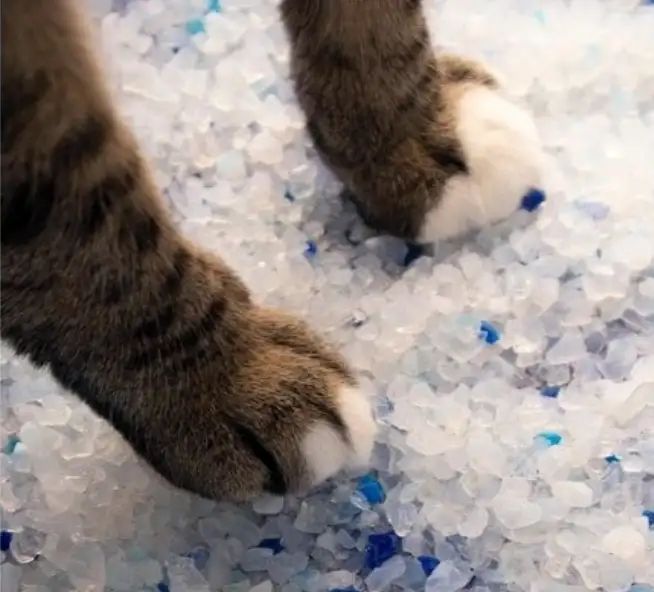
To understand why you need an alternative, it is helpful to know what silica gel actually is. Despite the name, it does not contain the naturally occurring crystalline silica found in sand or clay. Instead, it is made from synthetic amorphous silica gel-a highly porous material derived from sodium silicate. It is essentially the exact same substance found in those tiny “Do Not Eat” desiccant packets shipped with new shoes and electronics, simply scaled up into larger granules for your cat’s litter tray.
The primary appeal of silica gel is its extreme porosity. Each synthetic bead can absorb up to 40% of its weight in liquid, trapping water and ammonia within its microscopic network. Because it does not clump, pet owners are instructed to scoop out the solid waste and stir the remaining crystals daily to distribute the urine. Eventually, the beads reach their maximum saturation point, turning a yellowish hue, at which point the entire tray must be dumped, washed, and refilled. While this sounds low-maintenance in theory, the reality of living with crystal litter often tells a very different and less hygienic story.
While crystal litter is technically classified as non-toxic, “non-toxic” does not necessarily equate to “safe” or “comfortable.” Here are the primary reasons why UK cat owners are actively seeking the best alternative to silica gel crystals.
1. A Heavy Environmental Toll and Lack of Biodegradability
The most glaring issue with silica gel is its environmental footprint. Silica is not a renewable resource; it must be extracted from the earth through resource-intensive open-pit mining operations. These mining practices disrupt local ecosystems, require massive amounts of energy, and contribute significantly to carbon emissions.
Furthermore, silica gel is completely non-biodegradable. When you dump a tray of saturated synthetic crystals into your household bin, it goes straight to a landfill, where it will sit for centuries without breaking down. For eco-conscious consumers who are actively trying to reduce their carbon footprint and household waste, using a synthetic, mined product that ends up in a landfill every few weeks is simply counterproductive.
2. Respiratory Risks from Synthetic Dust
Many crystal litter brands market themselves as “dust-free,” but the reality is often quite different. During transit, the brittle silica beads rub against one another, breaking down and creating a fine, synthetic dust. When you pour the litter into the tray, or when your cat vigorously digs to bury their waste, this dust is launched directly into the air.
While synthetic amorphous silica is less dangerous than the crystalline silica found in traditional clay litters, inhaling any fine particulate matter is detrimental to respiratory health. This is a severe concern for households with asthmatic cats or owners who suffer from asthma, allergies, or other respiratory sensitivities. The repeated inhalation of synthetic dust can lead to chronic coughing, wheezing, and irritation of the delicate feline respiratory tract.
3. Dangerous Complications If Ingested
Cats are fastidious groomers. After using the litter tray, they naturally lick their paws to clean away any debris. Because silica gel is designed to be a highly effective desiccant, it immediately absorbs moisture upon contact. If a kitten or a cat with a habit of chewing ingests these crystals, the beads can rapidly absorb moisture within the digestive tract.
In small amounts, this might only cause mild gastrointestinal upset, vomiting, or diarrhoea. However, in larger quantities, the intense moisture-absorbing properties of the gel can lead to severe dehydration or even dangerous intestinal blockages. For kittens, whose digestive systems are tiny and fragile, the risk is significantly magnified, prompting many veterinarians to strongly advise against using crystal litter for young cats.
4. The Dreaded “Stirring” Routine and Pooling Urine
One of the most unpleasant realities of using silica gel litter is the maintenance routine. Because it is non-clumping, the urine stays in the tray. Manufacturers instruct owners to stir the crystals daily to ensure even absorption. In practice, this means you are using a scoop to actively mix your cat’s urine around the box.
If you fail to stir the litter thoroughly, or if your cat tends to urinate in the exact same corner every time, the beads in that area will quickly become oversaturated. The unabsorbed urine then pools at the bottom of the tray, creating a foul-smelling, unhygienic sludge that emits concentrated ammonia odours. Once the crystals are saturated, the odour control completely fails, requiring an immediate and total replacement of the litter.
5. Uncomfortable Texture for Sensitive Feline Paws
Cats have highly sensitive paw pads packed with nerve endings. In the wild, they naturally gravitate toward soft, sandy, or soil-like textures to do their business. Silica gel crystals are hard, irregular, and sometimes incredibly sharp. To a cat, walking on crystal litter can feel akin to walking on sharp gravel or broken glass.
This textural discomfort is a primary cause of litter box aversion. If a cat associates the litter tray with physical pain or discomfort, they will naturally seek out softer alternatives-which unfortunately often ends up being your living room rug, your bed, or a pile of clean laundry.
6. The “Beach Sand” Tracking Nightmare
Silica gel beads are incredibly lightweight. When your cat leaps out of the litter tray, these tiny, lightweight crystals easily become trapped between their toes and in their fur. As they walk around your home, the crystals are deposited onto your floors, carpets, and furniture. Not only is this visually messy, but stepping on a hard silica crystal with bare feet is a notoriously painful experience for pet parents.
Given these significant drawbacks, what is the solution? Pet owners have experimented with various natural alternatives-wood pellets, paper, corn, and tofu-but many of these come with their own compromises, such as poor clumping, susceptibility to mould, or unnatural textures.
This is where upcycled olive pits revolutionise the market. Through advanced natural processing, agricultural by-products-specifically olive pits that would otherwise be discarded from the olive oil industry-are transformed into a high-performance, premium cat litter. OliveScoop has pioneered this technology, creating an organic, biodegradable product that not only matches the performance of synthetic litters but vastly exceeds it in safety, sustainability, and comfort.
If you are searching for the best alternative to silica gel crystals, here is why an olive pit-based litter like OliveScoop is the undisputed champion.
1. 100% Organic, Biodegradable, and Eco-Friendly
Unlike silica gel, which requires destructive open-pit mining, OliveScoop is made entirely from renewable agricultural by-products. By repurposing olive pits, the production process actively reduces environmental waste. When the time comes to dispose of the litter, you can rest easy knowing it is 100% biodegradable. It breaks down naturally, making it a vastly superior choice for the eco-conscious UK household. You are no longer contributing plastic bags full of synthetic, non-degradable crystals to local landfills.
2. A Genuine Dust-Free Formula for Asthmatic Cats
While silica litter claims to be low-dust, OliveScoop is engineered to be genuinely dust-free. The natural density and structural integrity of processed olive pits mean that the granules do not break down into airborne dust particles when poured or dug into.
This makes OliveScoop one of the safest cat litter options available today for respiratory health. If you have an asthmatic cat, or if you or your family members suffer from asthma or allergies, eliminating airborne litter dust is a critical step in maintaining a healthy, comfortable indoor air quality.
3. Fast, Firm Clumping vs. Messy Stirring
Say goodbye to the foul task of stirring urine-soaked crystals. The natural porous microstructure of OliveScoop allows for rapid liquid absorption. When your cat urinates, the olive pit particles immediately draw in the moisture and form a tight, solid clump.
This fast-clumping action traps the moisture and odour instantly, allowing you to easily scoop out the soiled portion and leave the rest of the tray perfectly clean and dry. You use exactly what you need, reducing overall waste and ensuring that your cat always steps into a pristine environment.
4. Unbeatable Natural Odour Control Without Artificial Fragrances
Silica gel relies purely on desiccation to control odour, which fails the moment the beads reach saturation. Many other commercial litters attempt to mask smells with harsh, artificial perfumes that can irritate a cat’s highly sensitive sense of smell.
OliveScoop takes a scientifically superior approach. The natural chemical structure of the olive pit material actively neutralises ammonia molecules upon contact, trapping unpleasant smells at the source. It provides incredibly strong, long-lasting odour control entirely naturally. This is an absolute game-changer for UK pet owners living in flats or smaller homes where maintaining air freshness is paramount.
5. Gentle, Paw-Friendly Texture
Because OliveScoop is finely milled from organic material, it features a smooth, natural texture that mimics the soft soil cats prefer in the wild. It is exceptionally gentle on delicate paw pads. Cats with sensitive skin, kittens, and older cats with arthritis will find OliveScoop infinitely more comfortable to dig and walk in compared to hard, jagged silica crystals. This comfort dramatically reduces the risk of litter box aversion and inappropriate elimination around the house.
To clearly illustrate why upcycled olive pits are the best alternative to silica gel crystals, let’s look at a direct comparison:
| Feature | Silica Gel Crystal Litter | OliveScoop (Olive Pit Litter) |
| Material Source | Synthetic, derived via mining | 100% Natural, upcycled agricultural waste |
| Environmental Impact | High (Non-biodegradable, mined) | Extremely Low (Biodegradable, zero-waste) |
| Dust Levels | Moderate (Produces synthetic dust) | Completely Dust-Free (Asthma-friendly) |
| Urine Management | Non-clumping (Requires daily stirring) | Fast, solid clumping (Easy to scoop) |
| Odour Control | Fails when saturated; pooling occurs | Neutralises ammonia instantly upon contact |
| Texture | Hard, sharp, uncomfortable for paws | Soft, natural, gentle on sensitive pads |
| Safety if Ingested | Dangerous; can cause dehydration | Safe, natural, non-toxic organic material |
Cats are notorious creatures of habit. They develop strong preferences for the texture, scent, and location of their bathroom facilities. Even if you are upgrading them to the best alternative to silica gel crystals, a sudden change can cause stress and lead to litter box avoidance.
To ensure a smooth, stress-free transition, it is essential to introduce OliveScoop gradually over the course of 7 to 10 days. Follow this proven transition schedule:
Step 1: The 75/25 Mix (Days 1-3)
Start with a clean litter tray. Fill the bottom 75% of the tray with your cat’s current silica gel litter. Pour a layer of OliveScoop over the top to make up the remaining 25%. This allows your cat to visually inspect and smell the new litter while still feeling the familiar crystals beneath their paws.
Step 2: The 50/50 Mix (Days 4-6)
Once your cat is comfortably using the tray, mix the litters evenly. Use 50% silica gel and 50% OliveScoop. The textures will blend, and your cat will begin to experience the softer, more comfortable feel of the olive pits alongside the familiar crystals.
Step 3: The 25/75 Mix (Days 7-9)
Transition to using 25% silica gel and 75% OliveScoop. By this stage, the tray will predominantly feature the natural olive pit litter. Your cat will likely prefer the softer texture and lack of dust, and you will begin to notice the vastly improved clumping and odour control.
Step 4: 100% OliveScoop (Day 10 Onwards)
Empty the tray completely, wash it with a mild, unscented soap, and dry it thoroughly. Fill it entirely with a fresh layer of OliveScoop (around 2 to 3 inches deep). Your cat is now fully transitioned to a healthier, safer, and more comfortable bathroom experience.
When making the switch, it helps to understand feline psychology. In the wild, cats bury their waste to hide their scent from predators. They prefer substrates that are easy to dig, loose, and dry. When forced to use unnatural materials like silica gel, they are working against their evolutionary instincts.
By providing a natural, granular substrate like OliveScoop, you are indulging their wild instincts. This psychological comfort is just as important as the physical benefits. A happy cat that feels safe and comfortable in their litter tray is a cat that maintains excellent urinary health, avoiding stress-induced conditions like Feline Lower Urinary Tract Disease (FLUTD).
At first glance, silica gel might seem economical because a single bag is advertised to last a month. However, the reality of saturation, pooling urine, and failing odour control often means owners must replace the entire tray much sooner than anticipated.
OliveScoop offers exceptional long-term cost efficiency. Because it forms tight, solid clumps that trap liquid and odour instantly, you only remove the soiled litter. The remaining litter in the tray stays fresh, dry, and hygienic. You use significantly less product over time, meaning a single bag of OliveScoop stretches further, providing a better return on your investment while upgrading your cat’s quality of life.
The shift away from silica gel is part of a larger, positive movement within the UK pet care community. Pet owners are increasingly scrutinising the products they bring into their homes, demanding transparency, sustainability, and uncompromising safety.
Choosing a product like OliveScoop is a small but highly impactful way to align your pet care routine with your personal environmental values. By supporting brands that utilise upcycled agricultural waste, you are actively participating in a circular economy, reducing landfill mass, and rejecting the damaging ecological effects of strip mining.
While chemically non-toxic, silica gel can be dangerous if ingested, potentially causing dehydration or intestinal blockages (especially in kittens). It can also produce synthetic dust that may irritate a cat’s respiratory system.
The best alternative is an organic, clumping litter made from upcycled olive pits, such as OliveScoop. It offers superior natural odour control, fast clumping, and a genuinely dust-free experience without the environmental damage of silica.
Silica gel litter is not a direct cause of asthma, but the fine synthetic dust it releases when poured or dug into can trigger severe respiratory irritation and exacerbate symptoms in cats who already have asthma.
Yes. Olive pit cat litter is 100% biodegradable and made from renewable agricultural by-products. Unlike silica gel, which is mined and ends up in landfills, olive pit litter is a sustainable, zero-waste choice.
To prevent litter box aversion, transition gradually over 7 to 10 days. Start by mixing 75% silica gel with 25% natural litter, slowly increasing the ratio of the natural litter every few days until the tray is 100% natural.
Crystal litter relies on moisture absorption. Once the silica beads become saturated with urine, they can no longer absorb liquid or trap smells. Unabsorbed urine then pools at the bottom of the tray, creating a strong ammonia odour.
While silica gel crystals may have represented a step forward in litter technology years ago, they have been definitively outpaced by natural innovations. The environmental damage, respiratory risks from synthetic dust, unpleasant maintenance, and feline discomfort make silica an outdated choice for the modern household.
The best alternative to silica gel crystals is unequivocally clear. Upcycled olive pit litter provides the perfect harmony of nature and science. It delivers unparalleled clumping, robust natural odour control, and an asthma-friendly, dust-free environment, all while being completely biodegradable.
You owe it to your cat’s health-and your own peace of mind-to make the switch. Reject the dust, the mess, and the environmental guilt, and embrace the clean, natural power of the olive pit.
Ready to transform your cat’s litter experience?
Shop OliveScoop today! Get fast, reliable doorstep delivery and secure a special discount when you subscribe. Give your feline friend the natural comfort they deserve now!