
One litter tray per cat, plus one spare. That’s the rule vets and feline behaviourists agree on, usually written as n+1: one cat needs two trays, two cats need three, three cats need four.
The spare isn’t a luxury. It’s what keeps a clean, unguarded option available at all times, which is the single cheapest way to prevent accidents on your carpet.
| Cats in the home | Litter trays needed |
| 1 | 2 |
| 2 | 3 |
| 3 | 4 |
| 4 | 5 |
Here’s where the rule comes from, when you can bend it, and where on earth the extra tray goes in a British home.
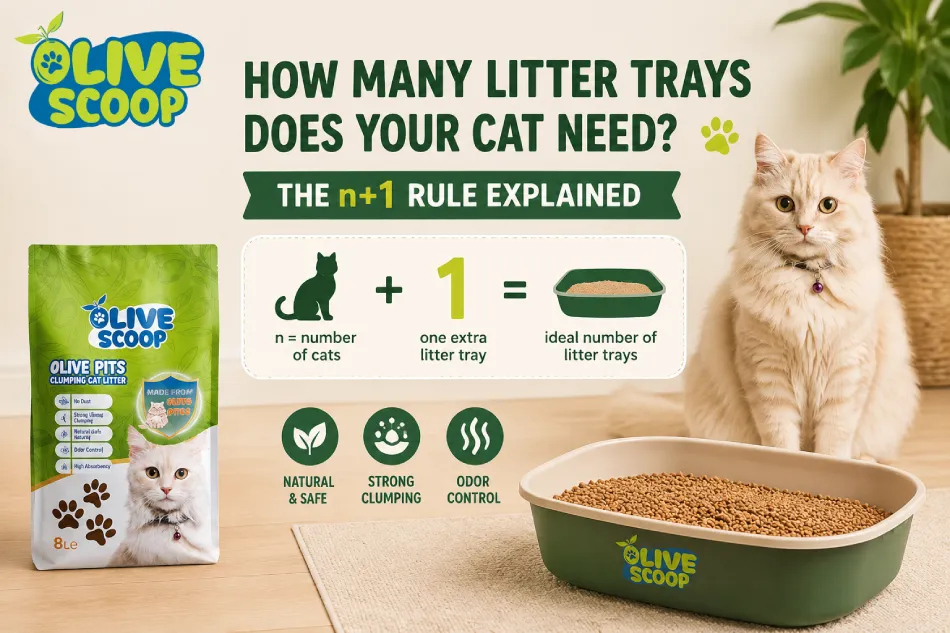
This isn’t pet-shop folklore. International Cat Care, the UK charity behind much of modern feline behaviour training, teaches one tray per cat plus one as part of a cat-friendly home, and the same guidance sits in the international veterinary guidelines on house soiling used by practices worldwide.
The logic is territorial. A cat doesn’t see the litter tray as shared plumbing; it sees a key resource inside its territory, the same category as food bowls and sleeping spots. Too few resources means competition, and competition around toileting is exactly where problems start: one cat guards, another queues, and the queuing cat eventually decides the rug behind the sofa involves less politics.
The spare tray also solves a simpler problem. Trays get used. If the only one available is already soiled, a fastidious cat would often rather go elsewhere, and cats are nothing if not fastidious.
Honestly? Sometimes it is. A confident adult cat in a single-storey home, with a good-sized tray in a quiet spot that gets scooped every day, can live perfectly happily with one. Plenty do.
The second tray earns its floor space in specific situations. Kittens have small bladders and shorter notice periods, so a tray on each side of the home prevents near-misses while they learn. Older cats with stiff joints appreciate not having a staircase between them and the loo.
Any home with two floors should have a tray on each, because a cat caught short upstairs won’t always make the journey down. And if there has ever been an accident, adding a second tray is the first fix behaviourists reach for, before anything fancier.
So treat two as the default and one as the earned exception, not the other way round.
A rule most owners have never heard: two trays sitting side by side count as one. Cats read the pair as a single toileting area, so a guarding cat can still block both at once and a soiled corner still contaminates the whole station. You’ve doubled your scooping without doubling anything your cat cares about.
Separate means separated. Different rooms is ideal; different floors is better still; at minimum, put a couple of metres and ideally a sightline break between trays. The point of the extra tray is that a cat can always reach one without crossing another cat, a noisy appliance or a dead end.
Easy to say “different rooms” from a house with a utility room and a study. British homes are tighter, so here’s the rule mapped onto real layouts.
In a one-bed flat, the workable pairing is usually the bathroom plus a quiet corner of the hallway or living room, at opposite ends of the space. Under-used spots like the gap beside a wardrobe or a corner behind an open door work well, provided the cat can see the room from the tray and has a clear exit. In a two-up two-down, one tray downstairs and one on the landing covers both floors and the night hours.
Wherever they go, the placement rules stay the same: quiet, away from food and water bowls, away from washing machines and tumble dryers, never in a spot where the cat can be cornered. Our guide to choosing the right litter box covers size and style, and the classic litter box mistakes are worth a scan before you commit to a spot.
Yes, at least one. This is the question the American guides never think to answer, because part-time outdoor cats are a distinctly British arrangement.
An outdoor-toileting cat still needs an indoor option for the nights you keep them in, for fireworks season, for the weeks of winter when they take one look at the rain and file a formal complaint, and for any illness or recovery period that keeps them inside.
A cat that has never used an indoor tray, suddenly shut in without one, has no good options; we’ve covered how long a cat can go without a litter box and the honest answer is: not comfortably. Keep one tray set up and occasionally used, and the disrupted weeks take care of themselves.
Short version: stress, and stress has teeth. Queueing and guarding push anxious cats into holding on, and held urine plus chronic stress is a recognised route into feline cystitis, a painful bladder condition that then causes the very accidents you were trying to avoid. Accidents themselves are the visible symptom; if they’re already happening, book a vet check first to rule out a medical cause, then fix the tray maths.
Two, following the same rule, but prioritise reachability over spacing: small bladders and big homes are a bad combination, so keep both trays low-sided and never more than a quick dash away while they’re learning.
Yes, once you know what your cat likes. Consistency across trays keeps every option equally acceptable. The exception is a deliberate preference test when you’re choosing a litter: different types in different trays for a week tells you exactly where your cat stands.
Often, yes. Arthritis makes stairs and long walks to the loo genuinely difficult, so a tray on every floor, each with a low entry, prevents accidents that have nothing to do with behaviour.
It raises them less than you’d expect. With a clumping litter you remove only what’s used, and the same total waste is now spread across two trays; you’re buying a second tray’s base fill, not doubling your monthly usage. Multipacks bring the per-bag price down for exactly this setup.