Every year, millions of tonnes of used cat litter end up in UK landfills, wrapped tightly in single-use plastic bags that will take centuries to decompose. For the environmentally conscious pet parent, this presents a significant dilemma. You want the absolute best for your feline companion, but navigating the confusing maze of UK council waste regulations while trying to reduce your carbon pawprint can feel like an impossible task.
However, by understanding exactly what your cat’s litter is made of and adopting smarter, eco-friendly waste management routines, you can make a profound difference. The result? A cleaner home, completely compliant waste disposal, and a protected environment.
In this comprehensive guide, we will walk you through the undeniable facts about UK waste disposal, the hazards of traditional litters, and the actionable steps you can take today to dispose of your cat’s waste ethically and sustainably.
Before we can discuss how to dispose of cat litter properly, we must address what we are throwing away. The UK pet market is saturated with various types of litter, but not all are created equal.
For decades, the standard choice has been sodium bentonite clay. While highly absorbent and excellent at clumping, clay litter comes with a massive environmental cost. The extraction process relies on strip mining, which destroys local ecosystems, strips away topsoil, and displaces local wildlife. Once used and thrown in the bin, clay litter does not biodegrade. It sits in landfills indefinitely, essentially turning into rock-hard cement when exposed to the elements.
Silica gel litters, often marketed as “crystal” litters, pose a similar problem. They are mined from quartz sand in highly energy-intensive processes. Like clay, they offer zero biodegradability.
If your goal is to dispose of cat litter ethically, the very first step is transitioning to a sustainable, plant-based alternative like OliveScoop, which is crafted from natural, renewable by-products rather than destructively mined minerals.
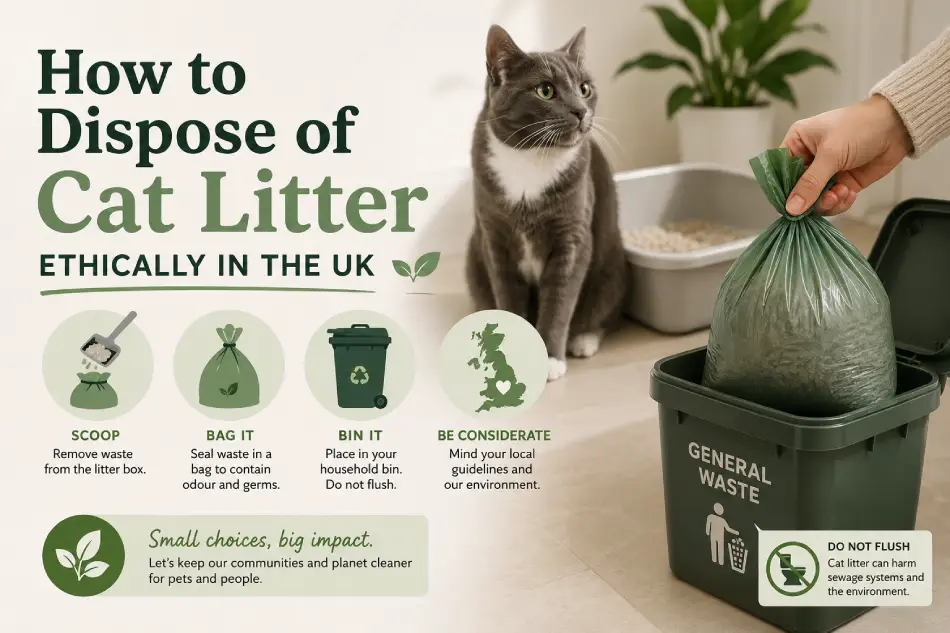
The most common question among UK cat owners is simple: Which bin does the cat litter go into? Because waste management is handled locally by individual borough and county councils across the UK, there can be slight variations in the rules. However, there are universal guidelines you must follow to avoid contaminating recycling streams or facing council fines.
1. The Black Bin (General Waste)
In almost every single jurisdiction in the UK, used cat litter must go into your general waste bin (usually the black or grey bin). This applies to all types of litter-clay, silica, wood, paper, and even biodegradable options like olive pit litter-if it has been soiled with faeces or urine.
When sending litter to the general waste bin, it is highly recommended to seal it to protect sanitation workers and prevent odours. Instead of using single-use plastic bags, opt for fully certified compostable bags (EN 13432 standard) or biodegradable paper sacks. Even in a landfill setting, reducing your plastic contribution is a step toward ethical disposal.
2. The Green or Brown Bin (Garden/Yard Waste)
Never put cat litter in your council-collected garden waste bin. Even if you use a 100% biodegradable and compostable cat litter, local councils strictly forbid the inclusion of pet waste in domestic garden bins.
Council composting facilities use commercial processes designed for plant matter. The introduction of carnivorous or omnivorous pet faeces introduces severe pathogen risks, which can contaminate hundreds of tonnes of municipal compost. Putting cat litter in the green bin will almost certainly result in your bin being refused collection.
3. The Food Waste Caddy
Similarly, cat litter must never be placed in your household food waste caddy. Food waste in the UK is heavily regulated and is often sent to anaerobic digesters to create biogas and agricultural fertilisers. Pet waste disrupts this delicate biological process and poses severe health and safety risks.
This is where much of the confusion lies. Some cat litters on the market boldly claim to be “flushable” on their packaging. However, in the UK, you should never flush cat litter or cat faeces down the toilet.
The UK water network and municipal water treatment plants are simply not designed to handle pet waste. There are two primary reasons for this strict rule:
To protect UK waterways and marine life, keep all cat waste far away from your plumbing. Bag it responsibly and place it in the general waste bin.
If you are using a 100% natural, biodegradable litter like OliveScoop, you might be wondering if you can bypass the council bins entirely and compost it at home. The answer is yes, but with extremely strict caveats.
Composting cat litter is one of the most environmentally friendly disposal methods available, as it returns organic matter to the earth. However, you must adhere to the following safety protocols:
Rule 1: Only Compost the Urine Clumps (With Caution)
You should only ever attempt to compost litter that is strictly soaked in urine, or completely unsoiled litter. Never compost cat faeces. As mentioned earlier, the Toxoplasma gondii parasite and other harmful bacteria present in faeces require sustained, incredibly high temperatures to be destroyed-temperatures that a standard residential garden compost bin simply cannot reach.
Rule 2: Strict Isolation from Edible Plants
If you choose to compost biodegradable cat litter, never use the resulting compost on edible crops. Whether you are growing herbs, root vegetables, or tending to a prized crop of cherry tomatoes, you must keep pet waste compost completely isolated from your food garden. Pathogens can easily survive the cold composting process, contaminate the soil, and ultimately transfer to your food, posing a significant risk to human health.
Use this specific compost exclusively for decorative flower beds, non-fruiting shrubs, or established trees away from any vegetable patches.
Rule 3: Use a Dedicated Hot Composter
To break down natural litters effectively, you need a healthy, active compost heap. Consider investing in a dedicated “hot composter” or a pet-waste specific wormery (Bokashi system) that stays entirely separate from your main garden compost. Mix the urine-soaked biodegradable litter with plenty of “greens” (grass clippings) and “browns” (dry leaves, cardboard) to ensure proper aeration and breakdown.
Transitioning to an ethical disposal routine does not have to be difficult. By establishing a clear system, you can manage your cat’s hygiene efficiently without compromising your environmental values.
Step 1: Choose the Right Litter Your disposal method is entirely dependent on the material you start with. Switch away from clay and silica. Opt for sustainable, low-impact alternatives. OliveScoop, for example, is crafted from reclaimed olive pits-a natural by-product that requires no mining, offers exceptional natural odour control, and is 100% biodegradable.
Step 2: Equip Your Station Ditch the plastic grocery bags. Stock up on certified compostable disposal bags or heavy-duty paper sacks. Keep a dedicated, tightly sealed waste bin exclusively for your cat’s litter right next to the tray to make daily scooping frictionless.
Step 3: The Daily Scoop Scoop the solids and clumps at least once, ideally twice, a day. Place them directly into your compostable bag.
Step 4: The Weekly Wash When it is time for a full tray change, empty the remaining degraded litter into a larger biodegradable sack. Wash the tray using an eco-friendly, non-toxic soap and warm water. Avoid harsh chemical bleaches that can irritate your cat’s respiratory system and pollute the water supply when rinsed down the sink.
Step 5: Final Disposal Seal the compostable bag securely. If you live in a flat, take the sealed bag down to the communal general waste paladin. If you live in a house, place it directly into your black/grey general waste council bin. If you are composting urine-soaked natural litter, transfer it immediately to your dedicated decorative-plant compost heap.
Your living situation in the UK heavily dictates your disposal options.
For Flat Dwellers: If you live in a high-rise or a block of flats without garden access, composting is entirely off the table. Your primary focus should be on material reduction. Because you must rely on communal general waste bins, choosing a highly efficient clumping litter means you throw away less volume overall. Natural clumping litters trap moisture tightly, meaning you only remove the soiled parts, making a single bag of litter last significantly longer. Always double-check that your compostable bags are robust enough to survive the trip down the rubbish chute without splitting.
For House Dwellers with Gardens: You have the advantage of space. You can set up a dedicated pet-waste compost bin at the far end of your garden. You also have direct control over your council bins. To prevent your black bin from smelling during the height of a UK summer, ensure your compostable bags are tied tightly, and consider sprinkling a layer of baking soda at the bottom of your outdoor wheelie bin to absorb ambient odours.
To ensure you are fully equipped with credible information, let’s clear up some pervasive myths.
Disposing of cat litter ethically in the UK boils down to a few fundamental principles: choosing sustainable materials, avoiding the toilet at all costs, understanding your local council bins, and minimising single-use plastics.
The simplest and most impactful change you can make today is upgrading what goes into the litter tray in the first place. By shifting away from destructively mined clay and embracing natural, renewable solutions like OliveScoop, you instantly reduce the environmental burden of your household. It is a small daily habit that cumulatively creates a massive positive impact on our planet.
Make the switch, follow the rules, and enjoy the peace of mind that comes with responsible, eco-friendly pet parenthood.
Take the Next Step for a Greener Home
1. Can I put used cat litter in my black general waste bin?
Yes. In the UK, the black (or grey) general waste bin is the correct and legally compliant place to dispose of all used cat litter, regardless of the material it is made from. Always bag the waste securely before binning it.
2. Is it illegal to flush cat poo down the toilet in the UK?
While not explicitly a criminal offence, it violates the guidelines of every major UK water authority. Flushing cat faeces risks causing severe household plumbing blockages and releases the harmful Toxoplasma gondii parasite into UK waterways, which devastates marine life.
3. Can I put biodegradable cat litter in the green garden waste bin?
No. UK councils strictly prohibit any form of pet waste in the green garden bins. Municipal composting facilities process green waste for agriculture, and the bacteria from cat faeces can contaminate vast batches of commercial compost.
4. How do you dispose of cat litter without using plastic bags?
You can easily swap single-use plastic bags for fully compostable bags (look for the EN 13432 certification) or use heavy-duty biodegradable paper sacks. Even newspaper can be used to wrap solid waste securely before placing it in the general waste bin.
5. What is the most environmentally friendly cat litter to use?
The most sustainable litters are those made from renewable, plant-based by-products rather than mined minerals. Options made from reclaimed materials, such as olive pit cat litter (OliveScoop), wood pellets, or tofu, are highly eco-friendly as they are naturally biodegradable and carbon-neutral.
6. Can I use composted cat litter on my vegetable patch?
Absolutely not. If you hot-compost urine-soaked biodegradable litter at home, the resulting compost must only be used on non-edible plants, decorative flower beds, or shrubs. Never use it on food crops like vegetables, herbs, or fruit, due to the risk of pathogen transfer.
7. Why is clay cat litter considered bad for the environment?
Clay litter (sodium bentonite) is sourced through destructive strip mining, which causes deforestation and soil erosion. Furthermore, it is not biodegradable; it expands and hardens when wet, meaning it takes up permanent space in landfills.