
Cats are graceful, playful companions, but just like humans, they can suffer from respiratory problems. One question many cat owners ask is: can dusty litter cause asthma in cats?
The short answer is yes, dusty litter can worsen respiratory conditions, including feline asthma.
Understanding how litter affects your cat’s lungs and choosing the right type can make a significant difference in their health and comfort.
Feline asthma is a chronic respiratory condition that inflames the airways, making it harder for cats to breathe. Several factors can trigger or worsen asthma:
Environmental allergens: Dust, pollen, smoke, and strong cleaning chemicals can irritate the lungs.
Respiratory infections: Viral or bacterial infections can exacerbate asthma symptoms.
Stress and obesity: These may not cause asthma directly, but they can worsen breathing difficulties.
Cat litter dust: Fine particles from clay or scented litters can irritate the airways, potentially triggering an attack.
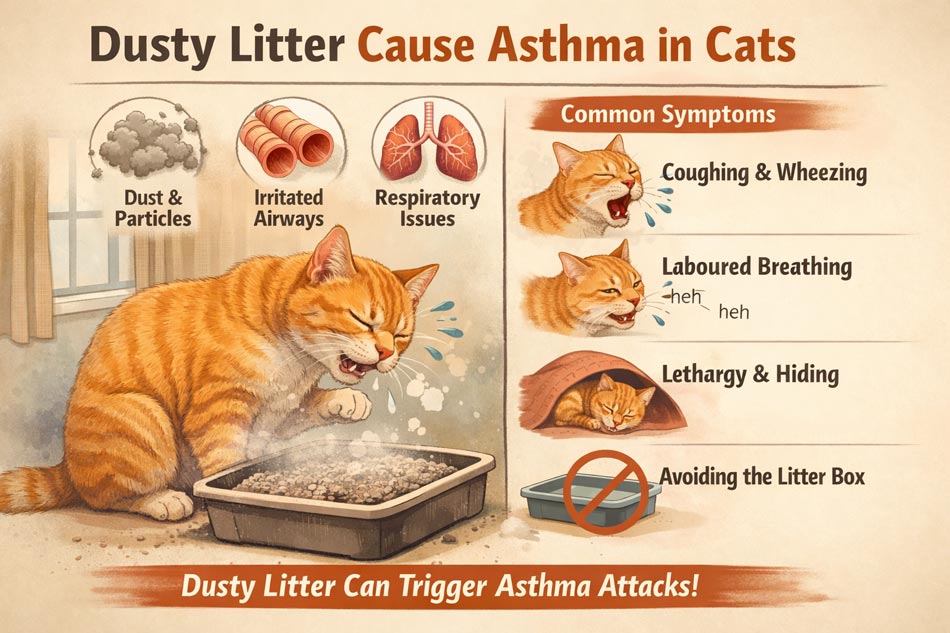
Cats are particularly sensitive to airborne irritants. A dusty litter tray in a poorly ventilated area can easily contribute to coughing, wheezing, or laboured breathing.
Choosing the right litter is crucial if your cat has asthma or is prone to respiratory issues. Experts recommend:
Low-dust or dust-free litters: These minimise airborne particles. Examples include wood, pine litter, plant-based litter, Olive pits, or OliveScoop Dust-Free Cat Litter, which is specially designed to reduce dust and protect sensitive lungs.
Unscented varieties: Fragrances can irritate sensitive lungs.
Clumping litters with large granules: They produce less fine dust compared to finely milled clumping clay.
Tip: Always introduce a new litter gradually, especially if your cat has asthma, to avoid sudden respiratory irritation.
Yes. Inhaling dust from traditional clay or finely milled litters can irritate and inflame a cat’s delicate airways. Even short-term exposure may trigger symptoms such as:
For cats with existing respiratory conditions, or those prone to asthma, long-term exposure to dusty litter can worsen symptoms and increase the risk of chronic lung problems.
Choosing a low-dust or dust-free litter can significantly reduce these risks and help keep your cat’s lungs healthy.
Recognising asthma early can improve outcomes. Common signs include:
If you notice these symptoms, consult a vet. They may recommend diagnostic tests such as x-rays, bronchoscopy, or allergy testing to confirm asthma and assess severity.
Dust-free or low-dust litter is generally the safest option for cats with asthma or sensitive lungs. Benefits include:
Example: A cat using paper-based litter may cough less and show more relaxed behaviour compared to when using traditional clay litter. This simple switch can significantly improve your cat’s quality of life.
Conclusion
Dusty cat litter can contribute to or worsen asthma in cats. Choosing a low-dust, unscented, and dust-free litter, combined with good hygiene and proper ventilation, helps protect your cat’s lungs. Observing signs of coughing, wheezing, or laboured breathing and consulting a vet promptly is essential. With the right litter and care, cats with asthma can lead comfortable, healthy lives.
